
Prof Alberto Ferreira De Souza, PhD (University College London)
Professor Emeritus of Computer Science
Professor Emeritus of Computer Science
Dr. Alberto Ferreira De Souza is Professor Emeritus of Computer Science at the Federal University of Espírito Santo (UFES), Brazil. He currently serves as Director of the I2CA – Institute of Applied Computational Intelligence of Espírito Santo, and also acts as CTO and Co-founder of Lume Robotics S.A., CSO and Co-founder of AUMO S.A., and Advisor of Motora Technologies S.A.
He received the Electronic Engineering degree (Cum Laude) and the M.Sc. in Systems and Computer Engineering from the Federal University of Rio de Janeiro (COPPE/UFRJ), Brazil, in 1988 and 1993, respectively, and the Doctor of Philosophy (Ph.D.) in Computer Science from University College London, United Kingdom, in 1999. He is the author or co-author of a U.S. patent and over 150 scientific publications. He has edited the proceedings of four conferences, including two IEEE-sponsored conferences, and is a Senior Member of IEEE.
Dr. De Souza has held several leadership positions at UFES and in the broader scientific and engineering community, including: Director of Research at UFES (2012–2013); Coordinator of the High-Performance Computing Laboratory (LCAD), UFES (2002–2019); Member of the Board of Directors of the Espírito Santo Foundation of Technology (FEST, 2004–2014); Vice-President for Planning and Institutional Development at UFES (2004–2008); Chair of the Management Committee of the High-Speed Metropolitan Network of Vitória (METROVIX, 2005–2008); Executive Director of the UFES Institute of Technology (2003–2004); Deputy Director of the Technology Center (2001–2004); Head of the Department of Informatics (2000); Member of the Board of Directors of CREA-ES (1995–1996); and Coordinator of the Computer Engineering Program at UFES (1994–1996).
Alberto Ferreira De Souza is a Commander of the Order of Rubem Braga.
My research career began in computer architecture and high-performance processing during my undergraduate studies in Electronic Engineering at UFRJ, through undergraduate research at the Systems Laboratory of the Graduate Program in Systems and Computer Engineering (PESC) at COPPE/UFRJ [1]. My undergraduate project, developed within PESC, was the first parallel machine developed in Brazil [2].
During my master's degree at COPPE, I conducted research in computer architecture and high-performance processing, being one of the designers of the NCP-1 supercomputer - Brazil's first supercomputer [3]. In the same period, I had my first contact with artificial intelligence in general and neural networks in particular, topics to which I would later dedicate myself.
In 1993, I joined UFES as a professor. From 1996 to 1999, I completed my PhD at University College London, UK, where I proposed the processor architecture called Dynamically Trace Scheduled VLIW (DTSVLIW) [4]. Upon returning, in 2002, I created the High-Performance Computing Laboratory (LCAD), which I coordinated until 2019, when I retired and began serving officially as a volunteer professor at UFES.
From the end of my doctorate to the present, I have contributed to the university in various capacities, including Coordinator of the Graduate Program in Informatics (PPGI), Coordinator of the Doctoral Program Creation Commission (created in 2010), Director of the Institute of Technology, Vice-Director of the Technology Center, Dean of Planning and Institutional Development, and Research Director of the university. In 2023, I was awarded the title of Professor Emeritus of UFES.
From the late 2000s, I began to dedicate myself more intensely to AI, neural networks, and their applications in autonomous robotics and other areas. I served as Paper Submission Chair of the IEEE World Congress on Computational Intelligence 2018 (WCCI'2018) and Director of I2CA. My highest-impact scientific articles are from these areas.
Currently, I serve as a faculty member of the Graduate Program in Informatics (PPGI) at the Federal University of Espírito Santo (UFES). In addition to my academic activities, I am the Chief Technology Officer (CTO) and co-founder of Lume Robotics S.A., the Chief Scientific Officer (CSO) and co-founder of AUMO S.A., and an advisor to Motora Technologies S.A., in which I also hold equity participation. While my earlier work concentrated on artificial intelligence for autonomous systems and large-scale computational infrastructures, my current research focus has increasingly shifted toward Digital Biology, particularly the integration of genomic foundation models, large neural architectures, and neurosymbolic reasoning frameworks for interpretable scientific discovery. Across academia and industry, my work aims to advance artificial intelligence and applied computational intelligence, fostering technology transfer and innovation between research laboratories and high-tech startups. You can learn more about me and my early academic trajectory here.
GPT, Large Language Models, Transformers Architecture
Neural Networks, CNNs, Computer Vision Applications
Computational Models of Human Visual Perception
Mobile Robotics, Path Planning, Autonomous Vehicles
My teaching focuses on cutting-edge topics in Artificial Intelligence and Robotics at both Master's and PhD levels. Recent courses cover Generative Pre-Trained Transformers and large language models (2023-2025), while foundational courses address Deep Learning architectures and their applications to computer vision and autonomous systems.
I also teach Visual Cognition, exploring computational models of human visual perception, and supervise numerous Directed Studies on autonomous vehicles, path planning, and AI applications in healthcare and industry. All courses are offered at the graduate level (PINF-6*** for Master's and PINF-7*** for PhD programs).
Genomic Foundation Models, Multi-Species Learning, AI-Driven Biomarker Discovery
Neural-Symbolic Integration, Knowledge Graphs, Ontology-Guided Reasoning
Transformers, Large Language Models, Generative AI Systems
Self-Driving Cars, Computer Vision, Sensor Fusion
My current research focuses on developing AI systems for digital biology that integrate genomic foundation models with neurosymbolic reasoning frameworks. The goal is to enable interpretable discovery from large-scale genomic and multi-species data, identifying biologically meaningful patterns associated with healthy longevity and age-related diseases.
Methodologically, this work combines long-context genomic transformers and large language model–style architectures with ontology-guided reasoning and biological knowledge graphs. By coupling neural prediction with structured validation, the approach aims to move beyond black-box inference toward hypothesis generation and mechanistic insight, contributing to AI-driven discovery in complex biological systems.
Claudine Badue and Rânik Guidolini and Raphael Vivacqua Carneiro and Pedro Azevedo and Vinicius B Cardoso and Avelino Forechi and Luan Jesus and Rodrigo Berriel and Thiago M Paixao and Filipe Mutz and Lucas de Paula Veronese and Thiago Oliveira-Santos and Alberto F De Souza
Unknown Venue, 2021
André Teixeira Lopes and Edilson De Aguiar and Alberto F De Souza and Thiago Oliveira-Santos
Pattern recognition, 2017
Lucas Tabelini and Rodrigo Berriel and Thiago M Paixao and Claudine Badue and Alberto F De Souza and Thiago Oliveira-Santos
Unknown Venue, 2021
Lucas Tabelini and Rodrigo Berriel and Thiago M Paixao and Claudine Badue and Alberto F De Souza and Thiago Oliveira-Santos
Unknown Venue, 2021
Fabio D Freitas and Alberto F De Souza and Ailson R De Almeida
Neurocomputing, 2009
Jacson Rodrigues Correia-Silva and Rodrigo F Berriel and Claudine Badue and Alberto F De Souza and Thiago Oliveira-Santos
Unknown Venue, 2018
Colin Rennie and Rahul Shome and Kostas E Bekris and Alberto F De Souza
IEEE Robotics and Automation Letters, 2016
Vinicius F Arruda and Thiago M Paixao and Rodrigo F Berriel and Alberto F De Souza and Claudine Badue and Nicu Sebe and Thiago Oliveira-Santos
Unknown Venue, 2019
Filipe Mutz and Lucas P Veronese and Thiago Oliveira-Santos and Edilson De Aguiar and Fernando A Auat Cheein and Alberto Ferreira De Souza
Expert Systems with Applications, 2016
Lucas C Possatti and Rânik Guidolini and Vinicius B Cardoso and Rodrigo F Berriel and Thiago M Paixão and Claudine Badue and Alberto F De Souza and Thiago Oliveira-Santos
Unknown Venue, 2019
Neurosymbolic Genomics
Developing a neurosymbolic AI platform for identifying genetic and epigenetic biomarkers associated with healthy longevity and age-related diseases. Combines genomic transformers with biological knowledge graphs.
View on GitHub Project Details (PDF)Deep Tech Startups
Co-founder of three deep tech startups born at LCAD, collectively employing over 150 people:
The most advanced autonomous vehicle in the Southern Hemisphere. IARA made an unprecedented autonomous journey from Vitória to Guarapari (74 km). The project includes over 13 million lines of open-source code.
View on GitHubDevelopment of the world's first autonomous taxiing system for passenger jet aircraft, in partnership with Embraer. This groundbreaking project is now part of aviation history.
World First AchievementUniversidade Federal do Espírito Santo (UFES)
3rd place - Innovative Researcher Category
State Council of Science and Technology - ES
DARPA - Defense Advanced Research Projects Agency
Institute of Electrical and Electronics Engineers
Lume Robotics: Autonomous Vehicle Tests in the Steel Industry
Autonomous tri-articulated truck transporting 120 tons of steel coils at ArcelorMittal
Lume Robotics: Mercedes-Benz Partnership for Autonomous Trucks
Mercedes-Benz announces partnership with Lume Robotics for autonomous trucks
Lume Robotics: Autonomous Minibus
Lume autonomous minibus demonstration
Lume Robotics: Autonomous Sample Transport at CENPES Petrobras
100% electric and autonomous vehicle for sample and cargo transport
IARA on Globo TV (Jornal Nacional)
National television coverage - 74km autonomous journey
First Brazilian Electric Autonomous Car
Partnership LCAD/UFES - Lume Robotics
DARPA Virtual Robotics Challenge
12th place worldwide
Selected media coverage of research activities and achievements.
VTV News report on how autonomous trucks and robots are transforming logistics operations in Amparo.

The Prometheus humanoid robot is being trained at UFES to prepare coffee autonomously — boiling water, positioning the filter, measuring coffee, pouring water, and serving. The project, coordinated by Prof. Alberto Ferreira, aims to develop Autonomous Computational Intelligences at the I2CA Institute, with completion expected by mid-2026.
Read on A Tribuna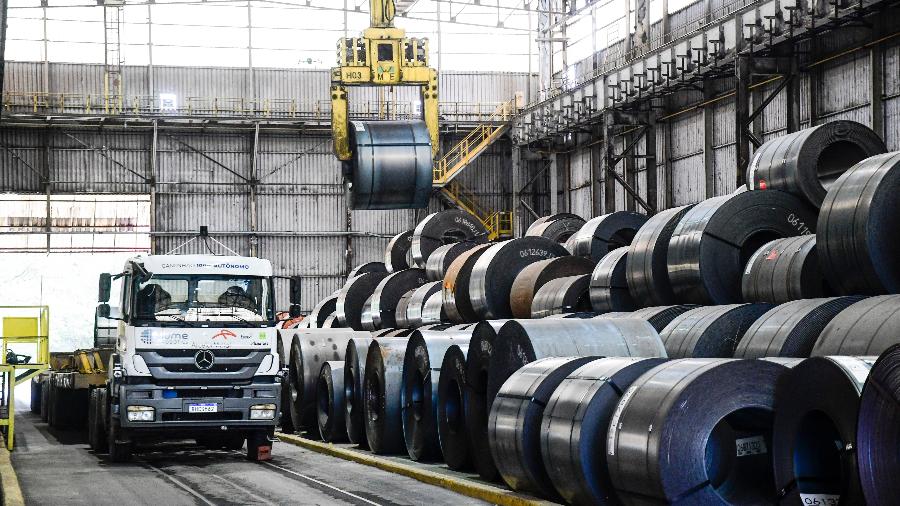
A tri-articulated truck capable of carrying up to 120 tons traveled without human intervention through ArcelorMittal facilities. Lume Robotics, an exponent of the autonomous vehicle industry flourishing in Vitória, achieved a world-first: the first three-axle truck operating autonomously.
Read on UOL Tilt
International coverage of Lume Robotics' successful autonomous truck operation transporting steel coils at ArcelorMittal facilities in Brazil.
Read on SelfDriveNewsIARA (Intelligent Autonomous Robotic Automobile), the autonomous car from UFES, was featured on Jornal Nacional, Brazil's main news program on Rede Globo.
For the first time, a Brazilian autonomous vehicle traveled 74 km on urban and highway roads without human intervention, from UFES campus to Meaípe beach in Guarapari.
Read full article (UFES)In-depth interview about IARA, the autonomous car developed at UFES, featuring details about the technology and research behind it.

Amazon.com Inc. attracted teams from 31 universities for its first "Amazon Picking Challenge" at the International Conference of Robotics and Automation in Seattle. Each team’s robot tried to pick up a shopping list of items of varying shapes and sizes off of shelves and place them in a bin. Amazon's Kelly Cheeseman and Rutgers University’s Alberto De Souza spoke at the event on Wednesday. (Source: Bloomberg)
Watch videoThe UFES autonomous car project achieved a major milestone: completing a full lap around the Goiabeiras campus. Around midnight, on the 30th, the car traveled 3.8 km of the ring road surrounding the campus without any human interference — the longest distance ever traveled.
Read full article (UFES)Brazilian autonomous vehicle projects bring contributions to the future of urban mobility. Featured in FAPESP research magazine (November 2013).
Read the full report (PDF)
A Tribuna newspaper full-page feature on the High-Performance Computing Laboratory (LCAD), the autonomous car IARA, facial recognition camera, robotic arm, and the DARPA Virtual Robotics Challenge.
View original (PDF)With 99.3% accuracy, the system uses neural network techniques and is already one of the best in the world. The technology could be used by police for identification purposes.

Professors and students created a car that drives itself. The driver is a computer. Featured on Globo's Jornal Hoje.
Watch video
The vehicle project was developed by students and professors at UFES. The estimated time to acquire such a car commercially: 10 to 15 years.
Read full article (G1)
Researchers at the university are developing their own technology. The first tests are expected to begin next month.

A robot that can see objects and recognize people similarly to humans. The team, led by Professor Alberto Ferreira, is developing technologies to create a robot-forklift with visual capabilities. "It will have the capacity to create an internal image from its surroundings, similar to how the brain interprets the world through vision."

A supercomputer system assembled from 65 interconnected microcomputers, working together as one machine. Known as "Enterprise," it's considered the most powerful cluster operating in a Brazilian university. According to Prof. Alberto Ferreira, PhD in Computer Science, "We're working so that in 20 years we can build cars that drive themselves."

After seven months of work, UFES researchers created Enterprise — the fastest supercomputer in Brazil and one of the 50 fastest in the world. With 65 Athlon XP 1800+ machines, it can execute in 72 hours programs that would take 70 days on a regular PC. Maximum performance: 204 Gigaflops per second.
Interested in collaboration, research opportunities, or have questions about our work? Feel free to reach out.